
Lotto matches belong to one draw: do not combine two result rows
Three matches in one draw and three in another do not make six matches in either draw. A number can be present somewhere in a result archive without belonging to the result that applies to a particular entry.
This guide in the jilibet lottery section uses invented six-number records to show the difference. It concerns matching records to their draw, not choosing numbers, predicting results or approving a prize claim.
Write the entry once, then compare each draw separately
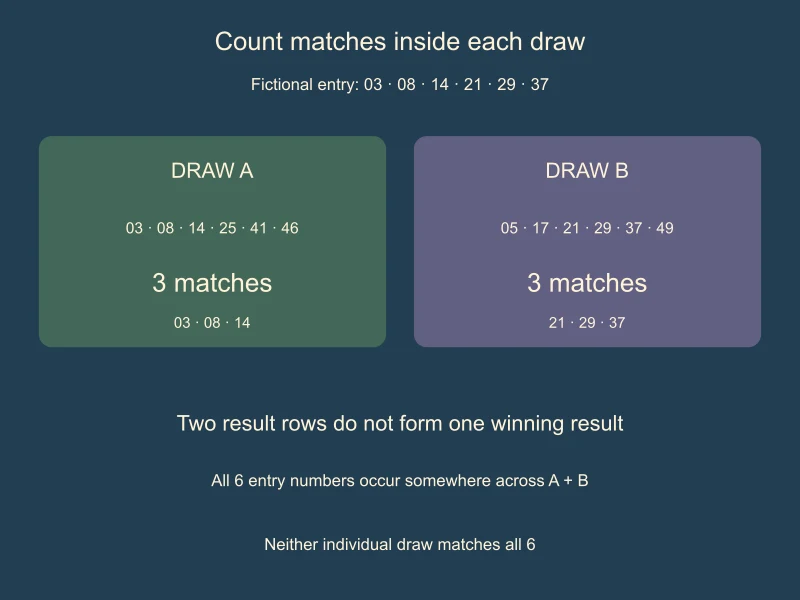
Assume a fictional product draws six different main numbers from 1 to 49. Matching is unordered, and each entry applies only to its specified draw. The example entry is 03, 08, 14, 21, 29, 37. Draw A records 03, 08, 14, 25, 41, 46; draw B records 05, 17, 21, 29, 37, 49.
The entry matches 03, 08 and 14 in A: three numbers. It matches 21, 29 and 37 in B: another three. A spreadsheet that merges both result sets can find every entry number somewhere in the combined list. But that list is twelve numbers from two different draws, not the six-number result of one draw.
| Fictional record | Main result numbers | Entry numbers matched in that draw |
|---|---|---|
| Draw A | 03, 08, 14, 25, 41, 46 | 03, 08, 14 — three |
| Draw B | 05, 17, 21, 29, 37, 49 | 21, 29, 37 — three |
| Archive union | Twelve numbers from A and B together | All six entry numbers occur somewhere; this is not a draw result |
Entry validity and numerical overlap are separate checks
If the example entry were valid only for A, B’s result would not be another result for that entry. If a separate accepted entry with the same numbers were valid for B as well, compare each accepted entry with its own draw. Each example comparison still has three main-number matches.
Those observations alone establish no prize. An actual product may define additional-number roles, different tiers and claim conditions. The teaching example omits those rules so the draw-identity error remains visible. It does not substitute a foreign product’s rules for a Philippines product.
A real rule example ties matching to a particular draw
Clause 1.1 of the Singapore Pools TOTO rules ties a ticket’s matching result to the particular draw for which it is valid. This is a named foreign example, not evidence about a Philippines operator or the invented product here.
The useful recordkeeping lesson is narrower than a prize calculation: retain the draw identity beside the numbers. Do not erase that identity while copying an archive into a spreadsheet. The two sets can be combined to study historical occurrence, but the combined archive must retain its different purpose and label.
Repeated matches are not new distinct numbers
For a second comparison, replace B with fictional draw C: 03, 08, 14, 30, 42, 48. A and C each match the same three entry numbers. Adding their per-draw match counts gives six match occurrences across two draws, while only three distinct entry numbers appeared.
Thus a total of six can describe at least two different summaries: six occurrences across draws, or six distinct numbers somewhere across draws. Neither summary proves six matches in one draw. State what was counted before presenting the total.
Keep enough context to reproduce each comparison
In a real archive, a draw key may require the product, date, session, timezone and official draw identifier. The entry record needs its own applicable draw identity. Use the source’s actual fields; do not invent a missing draw number because two rows have similar dates.
A corrected result for A should remain a revision of A, rather than become a new draw row. A repeated screenshot of A is also not a new draw. When a field is unresolved, keep that comparison unresolved until the correct source is found.
The existing guide to the context needed to verify a lotto result screenshot explains what can be lost in a crop. Use that context to select the right row before counting matches. Clear digits with a missing session still do not identify the applicable event.
Report one draw per matching row
For the first example, the clean summary is “A: three main-number matches; B: three main-number matches,” with the entry’s validity for each draw recorded separately. If reporting an archive union instead, label it “six distinct entry numbers appeared across two draws” and keep it separate from the per-draw comparison.
Source and set comparisons checked on 10 October 2026. All entry numbers and results here are invented. No real ticket, acceptance record or prize entitlement was verified.